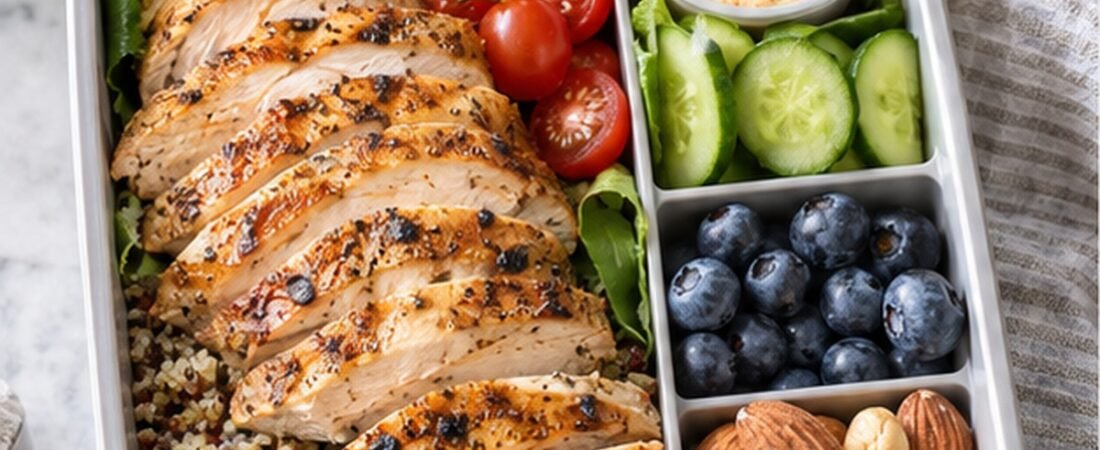
This guide turns every lunchbox idea into a complete one-lunch formula instead of a list of names. Each option includes measured components and packing instructions. Portions can be increased or reduced for age, appetite, school schedule and medical needs.
Complete Recipes
1. Peanut Butter and Banana Power Box
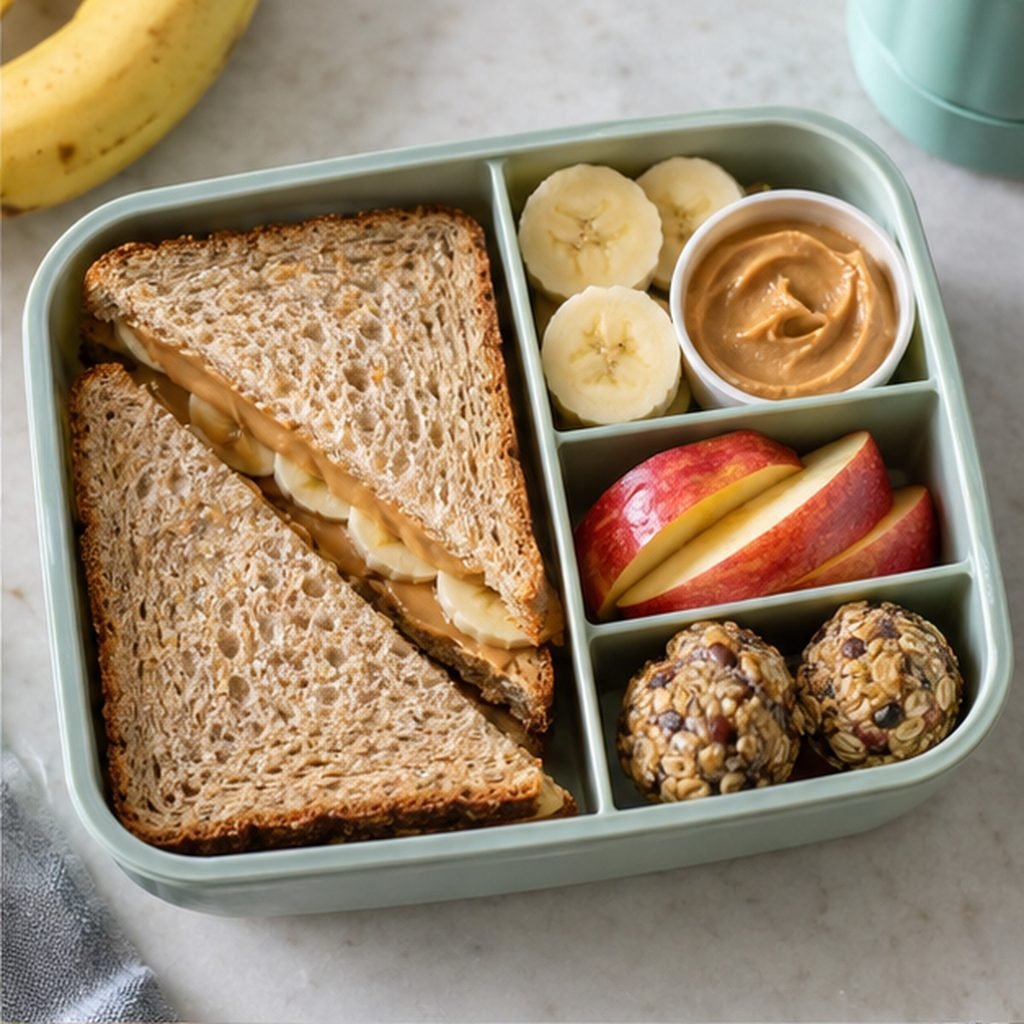
Ingredients for One Lunch
- 1 whole-grain main item matching the heading
- 2 oz cooked lean protein or 1/3 cup beans
- 1/2 cup fruit
- 1/3 cup vegetables
- 1 oz cheese or 1/2 cup yogurt
Preparation and Packing
- Prepare every cooked component using a tested recipe and cool it promptly.
- Measure the components and keep wet foods in sealed cups.
- Cut foods to an age-appropriate size.
- Pack below 40°F/4°C with a frozen cold source.
Adjust the amount to the child’s appetite and school schedule. The measurements describe one practical lunch, not a medical nutrition prescription. Substitute only foods permitted by the school and safe for the child’s allergies and chewing skills.
Make-Ahead Notes
Prepare the components for peanut butter and banana power box the evening before only when they hold well under refrigeration. Cool cooked foods before closing the container, dry washed produce, and isolate sauces or juicy fruit in sealed cups. In the morning, add the frozen cold source last and close the insulated bag. If part of the lunch repeatedly returns uneaten, reduce that component rather than packing a larger selection that will be discarded.
2. Ham and Cheese Snack Box
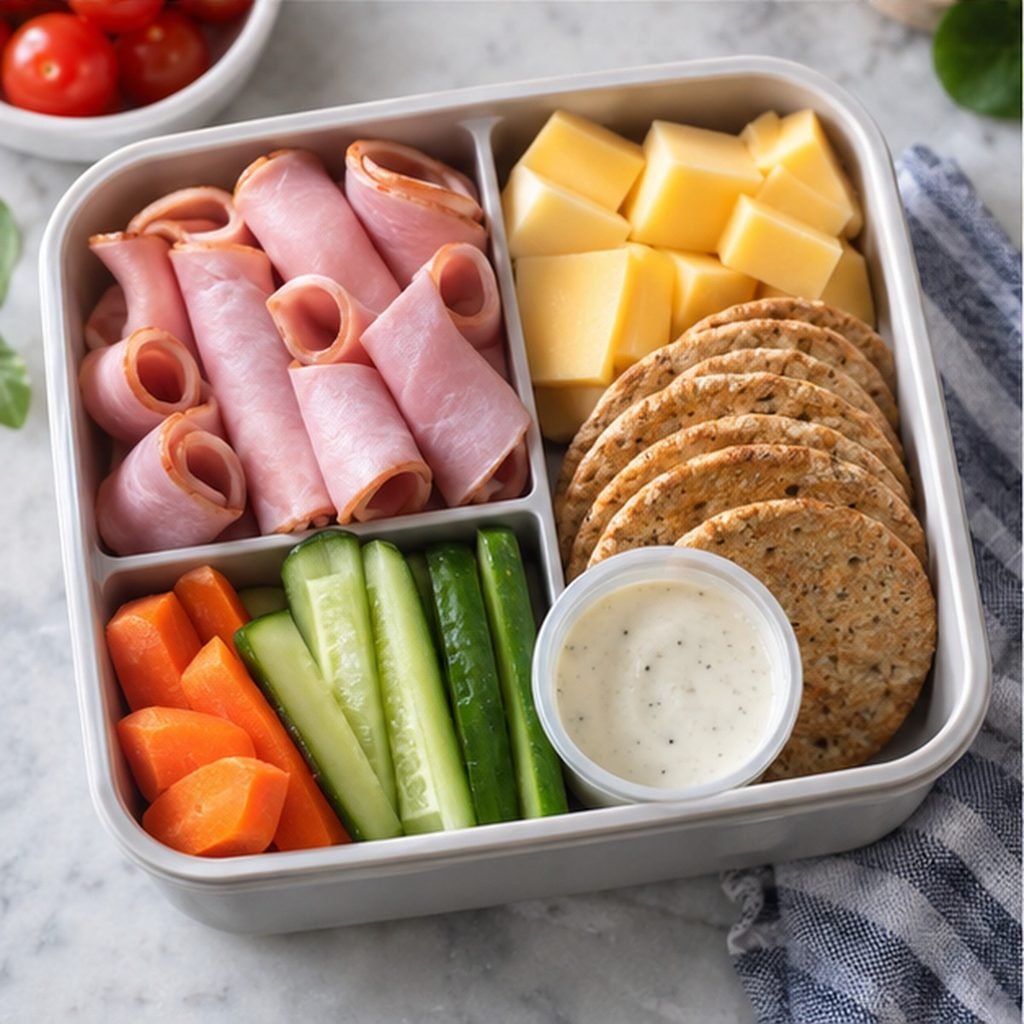
Ingredients for One Lunch
- 1/3 cup hummus or 2 oz cheese
- 1 oz cooked turkey, ham, or a school-approved protein
- 1/2 cup whole-grain crackers
- 1/2 cup cucumber, carrot, or bell-pepper pieces
- 1/2 cup fruit
- 1 tbsp seed butter, optional
Preparation and Packing
- Portion hummus into a leak-resistant cup or cut cheese into bite-size pieces.
- Add the selected protein and crackers in dry compartments.
- Wash, dry and cut produce appropriately for the child.
- Check allergy rules and pack all perishables with a frozen cold source.
Adjust the amount to the child’s appetite and school schedule. The measurements describe one practical lunch, not a medical nutrition prescription. Substitute only foods permitted by the school and safe for the child’s allergies and chewing skills.
Make-Ahead Notes
Prepare the components for ham and cheese snack box the evening before only when they hold well under refrigeration. Cool cooked foods before closing the container, dry washed produce, and isolate sauces or juicy fruit in sealed cups. In the morning, add the frozen cold source last and close the insulated bag. If part of the lunch repeatedly returns uneaten, reduce that component rather than packing a larger selection that will be discarded.
3. Chicken Bites and Vegetables
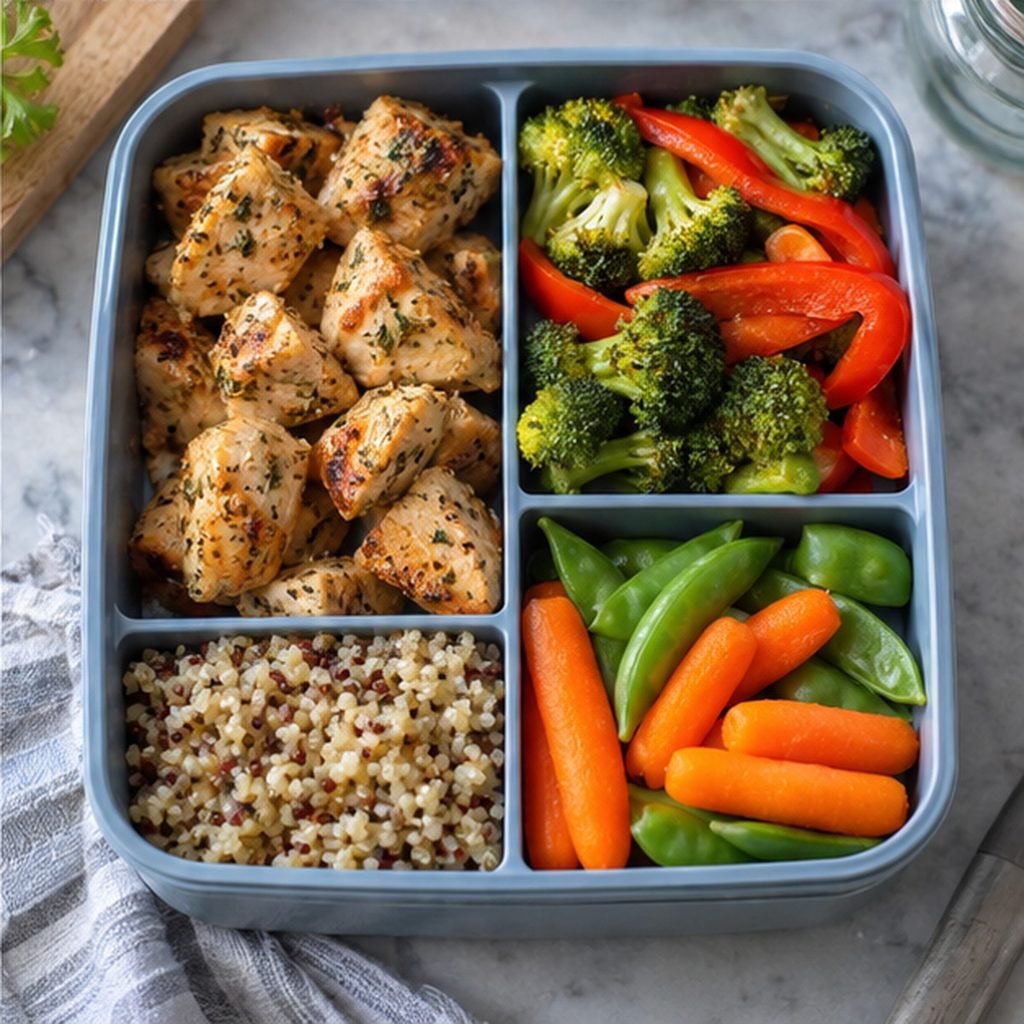
Ingredients for One Lunch
- 2 oz fully cooked chicken, turkey, ham, tuna, salami, or sausage as named
- 1/2 cup whole-grain crackers or 1 small roll
- 1/2 cup fruit
- 1/3 cup crisp vegetables
- 1 oz cheese or 2 tbsp hummus
Preparation and Packing
- Cook raw poultry to 165°F/74°C and cool promptly; use ready-to-eat meats according to the label.
- Cut the protein into manageable pieces and pack it only when cold.
- Add dry crackers, fruit, vegetables and cheese or hummus in separate compartments.
- Use an ice pack and follow school rules for skewers, allergens and processed meats.
Adjust the amount to the child’s appetite and school schedule. The measurements describe one practical lunch, not a medical nutrition prescription. Substitute only foods permitted by the school and safe for the child’s allergies and chewing skills.
Make-Ahead Notes
Prepare the components for chicken bites and vegetables the evening before only when they hold well under refrigeration. Cool cooked foods before closing the container, dry washed produce, and isolate sauces or juicy fruit in sealed cups. In the morning, add the frozen cold source last and close the insulated bag. If part of the lunch repeatedly returns uneaten, reduce that component rather than packing a larger selection that will be discarded.
4. Tuna and Crackers
Ingredients for One Lunch
- 2 oz fully cooked chicken, turkey, ham, tuna, salami, or sausage as named
- 1/2 cup whole-grain crackers or 1 small roll
- 1/2 cup fruit
- 1/3 cup crisp vegetables
- 1 oz cheese or 2 tbsp hummus
Preparation and Packing
- Cook raw poultry to 165°F/74°C and cool promptly; use ready-to-eat meats according to the label.
- Cut the protein into manageable pieces and pack it only when cold.
- Add dry crackers, fruit, vegetables and cheese or hummus in separate compartments.
- Use an ice pack and follow school rules for skewers, allergens and processed meats.
Adjust the amount to the child’s appetite and school schedule. The measurements describe one practical lunch, not a medical nutrition prescription. Substitute only foods permitted by the school and safe for the child’s allergies and chewing skills.
Make-Ahead Notes
Prepare the components for tuna and crackers the evening before only when they hold well under refrigeration. Cool cooked foods before closing the container, dry washed produce, and isolate sauces or juicy fruit in sealed cups. In the morning, add the frozen cold source last and close the insulated bag. If part of the lunch repeatedly returns uneaten, reduce that component rather than packing a larger selection that will be discarded.
5. Egg and Vegetable Power Box
Ingredients for One Lunch
- 2 hard-cooked eggs or 2 cooled mini egg muffins
- 1 tsp mayonnaise plus a pinch of pepper if making egg salad
- 2 slices whole-grain bread or 1/2 cup crackers
- 1/3 cup cucumber or carrot sticks
- 1/2 cup fruit
Preparation and Packing
- Cook eggs until yolks and whites are firm, cool rapidly, and refrigerate.
- For egg salad, chop and mix with mayonnaise only after cold.
- Assemble the sandwich just before packing or keep crackers separate.
- Pack with an ice pack and discard food left warm for more than two hours.
Adjust the amount to the child’s appetite and school schedule. The measurements describe one practical lunch, not a medical nutrition prescription. Substitute only foods permitted by the school and safe for the child’s allergies and chewing skills.
Make-Ahead Notes
Prepare the components for egg and vegetable power box the evening before only when they hold well under refrigeration. Cool cooked foods before closing the container, dry washed produce, and isolate sauces or juicy fruit in sealed cups. In the morning, add the frozen cold source last and close the insulated bag. If part of the lunch repeatedly returns uneaten, reduce that component rather than packing a larger selection that will be discarded.
6. Greek Yogurt and Berries
Ingredients for One Lunch
- 3/4 cup plain Greek yogurt
- 3/4 cup mixed fruit cut appropriately for the child
- 1/4 cup low-sugar granola or whole-grain cereal
- 1 tbsp seed butter or 1 oz cheese
- 1/3 cup whole-grain crackers
Preparation and Packing
- Wash fruit under running water and dry it.
- Cut round fruit such as grapes lengthwise into quarters for young children.
- Pack dairy in a leak-resistant cup and keep granola separate until eating.
- Add crackers and maintain refrigeration with a frozen cold source.
Adjust the amount to the child’s appetite and school schedule. The measurements describe one practical lunch, not a medical nutrition prescription. Substitute only foods permitted by the school and safe for the child’s allergies and chewing skills.
Make-Ahead Notes
Prepare the components for greek yogurt and berries the evening before only when they hold well under refrigeration. Cool cooked foods before closing the container, dry washed produce, and isolate sauces or juicy fruit in sealed cups. In the morning, add the frozen cold source last and close the insulated bag. If part of the lunch repeatedly returns uneaten, reduce that component rather than packing a larger selection that will be discarded.
7. Salami and Mozzarella
Ingredients for One Lunch
- 2 oz fully cooked chicken, turkey, ham, tuna, salami, or sausage as named
- 1/2 cup whole-grain crackers or 1 small roll
- 1/2 cup fruit
- 1/3 cup crisp vegetables
- 1 oz cheese or 2 tbsp hummus
Preparation and Packing
- Cook raw poultry to 165°F/74°C and cool promptly; use ready-to-eat meats according to the label.
- Cut the protein into manageable pieces and pack it only when cold.
- Add dry crackers, fruit, vegetables and cheese or hummus in separate compartments.
- Use an ice pack and follow school rules for skewers, allergens and processed meats.
Adjust the amount to the child’s appetite and school schedule. The measurements describe one practical lunch, not a medical nutrition prescription. Substitute only foods permitted by the school and safe for the child’s allergies and chewing skills.
Make-Ahead Notes
Prepare the components for salami and mozzarella the evening before only when they hold well under refrigeration. Cool cooked foods before closing the container, dry washed produce, and isolate sauces or juicy fruit in sealed cups. In the morning, add the frozen cold source last and close the insulated bag. If part of the lunch repeatedly returns uneaten, reduce that component rather than packing a larger selection that will be discarded.
8. Cottage Cheese and Fruit
Ingredients for One Lunch
- 3/4 cup cottage cheese
- 3/4 cup mixed fruit cut appropriately for the child
- 1/4 cup low-sugar granola or whole-grain cereal
- 1 tbsp seed butter or 1 oz cheese
- 1/3 cup whole-grain crackers
Preparation and Packing
- Wash fruit under running water and dry it.
- Cut round fruit such as grapes lengthwise into quarters for young children.
- Pack dairy in a leak-resistant cup and keep granola separate until eating.
- Add crackers and maintain refrigeration with a frozen cold source.
Adjust the amount to the child’s appetite and school schedule. The measurements describe one practical lunch, not a medical nutrition prescription. Substitute only foods permitted by the school and safe for the child’s allergies and chewing skills.
Make-Ahead Notes
Prepare the components for cottage cheese and fruit the evening before only when they hold well under refrigeration. Cool cooked foods before closing the container, dry washed produce, and isolate sauces or juicy fruit in sealed cups. In the morning, add the frozen cold source last and close the insulated bag. If part of the lunch repeatedly returns uneaten, reduce that component rather than packing a larger selection that will be discarded.
9. Cheese and Cracker Box
Ingredients for One Lunch
- 1/3 cup hummus or 2 oz cheese
- 1 oz cooked turkey, ham, or a school-approved protein
- 1/2 cup whole-grain crackers
- 1/2 cup cucumber, carrot, or bell-pepper pieces
- 1/2 cup fruit
- 1 tbsp seed butter, optional
Preparation and Packing
- Portion hummus into a leak-resistant cup or cut cheese into bite-size pieces.
- Add the selected protein and crackers in dry compartments.
- Wash, dry and cut produce appropriately for the child.
- Check allergy rules and pack all perishables with a frozen cold source.
Adjust the amount to the child’s appetite and school schedule. The measurements describe one practical lunch, not a medical nutrition prescription. Substitute only foods permitted by the school and safe for the child’s allergies and chewing skills.
Make-Ahead Notes
Prepare the components for cheese and cracker box the evening before only when they hold well under refrigeration. Cool cooked foods before closing the container, dry washed produce, and isolate sauces or juicy fruit in sealed cups. In the morning, add the frozen cold source last and close the insulated bag. If part