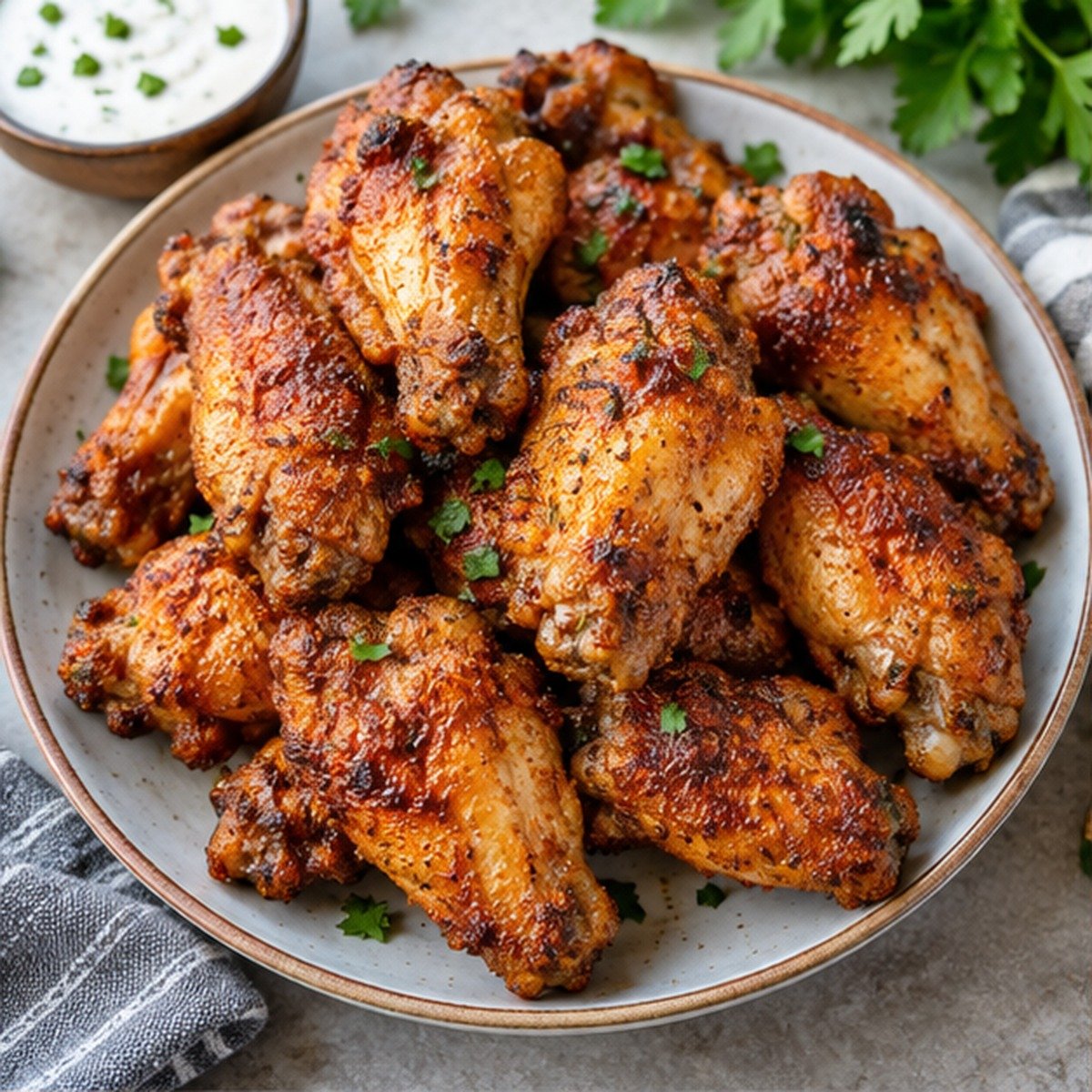
This method uses the quantities and core technique shown in the Pin, then checks the cooking guidance against published air-fryer methods and official poultry-safety advice.
Air fryers vary in basket shape, fan strength, capacity, and actual temperature. Therefore, the cooking time should be treated as a range, and doneness must always be confirmed with a food thermometer.
Ingredients
- 2 pounds chicken wings, separated into flats and drumettes
- 1 tablespoon avocado oil or another high-smoke-point cooking oil
- 1 teaspoon salt
- 1/2 teaspoon black pepper
- 1 teaspoon garlic powder
- 1/2 teaspoon paprika
- 1/2 teaspoon aluminum-free baking powder, optional for a crispier surface
How to Make Crispy Air Fryer Chicken Wings
Step 1: Dry the Chicken Wings
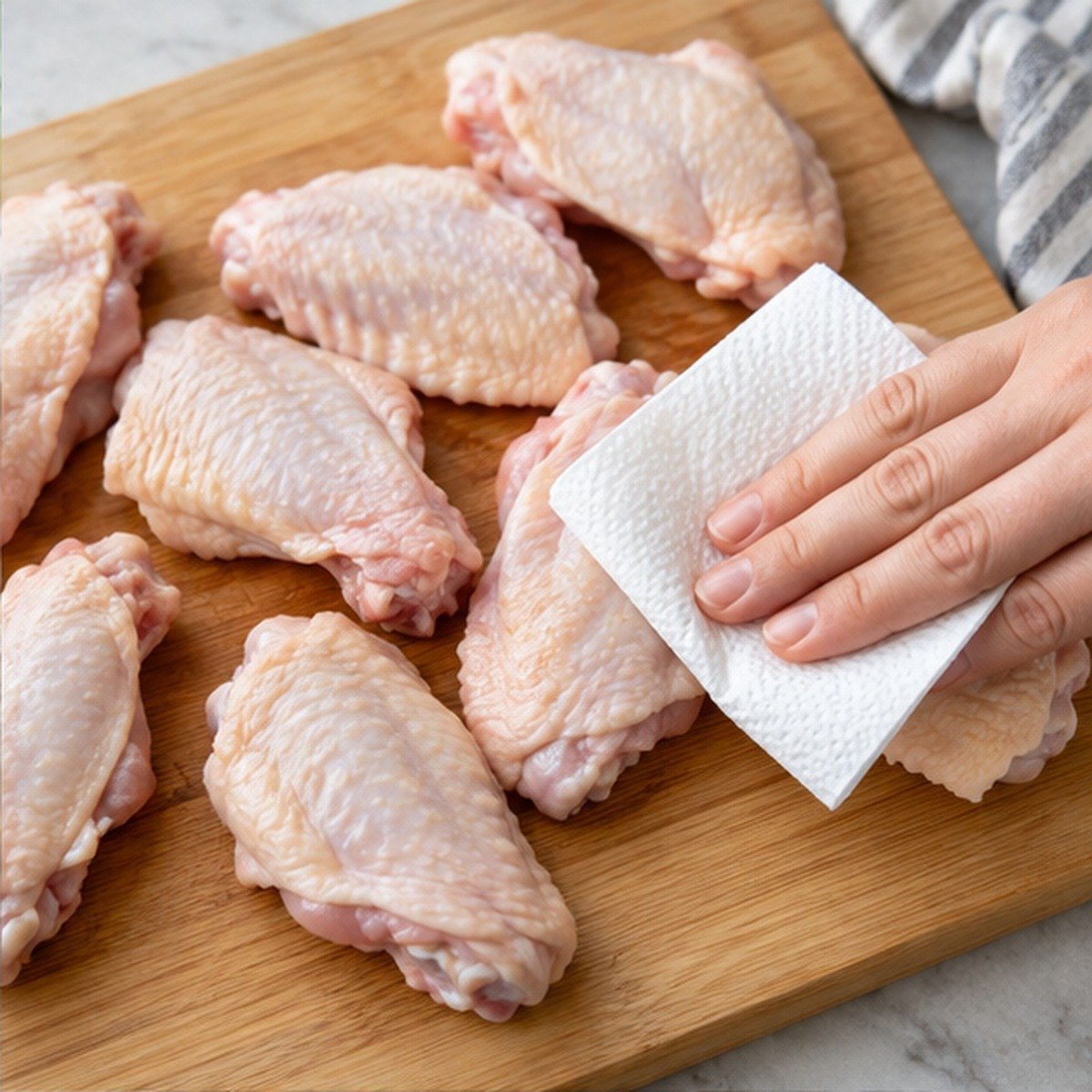
Pat the chicken wings thoroughly dry with paper towels. Surface moisture delays browning and can cause the skin to steam instead of becoming crisp.
Check that the wings are completely thawed before using this cooking schedule. Frozen wings release more water and require a different method and cooking time.
Step 2: Add the Seasonings
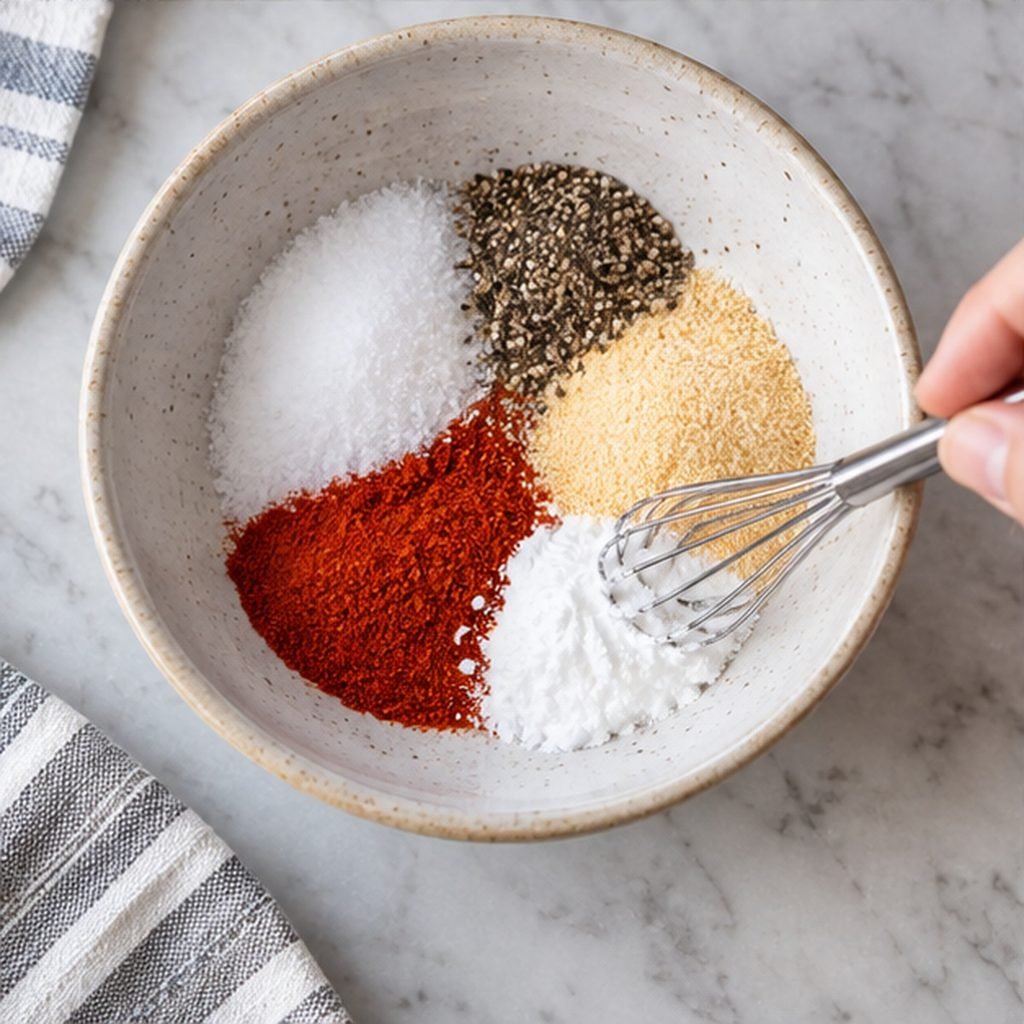
Combine the salt, black pepper, garlic powder, paprika, and optional baking powder in a small bowl.
Place the dry wings in a large mixing bowl. Add the oil and toss until every wing has a light coating. Sprinkle the seasoning mixture over the wings and toss again until it is distributed evenly.
Step 3: Arrange the Wings
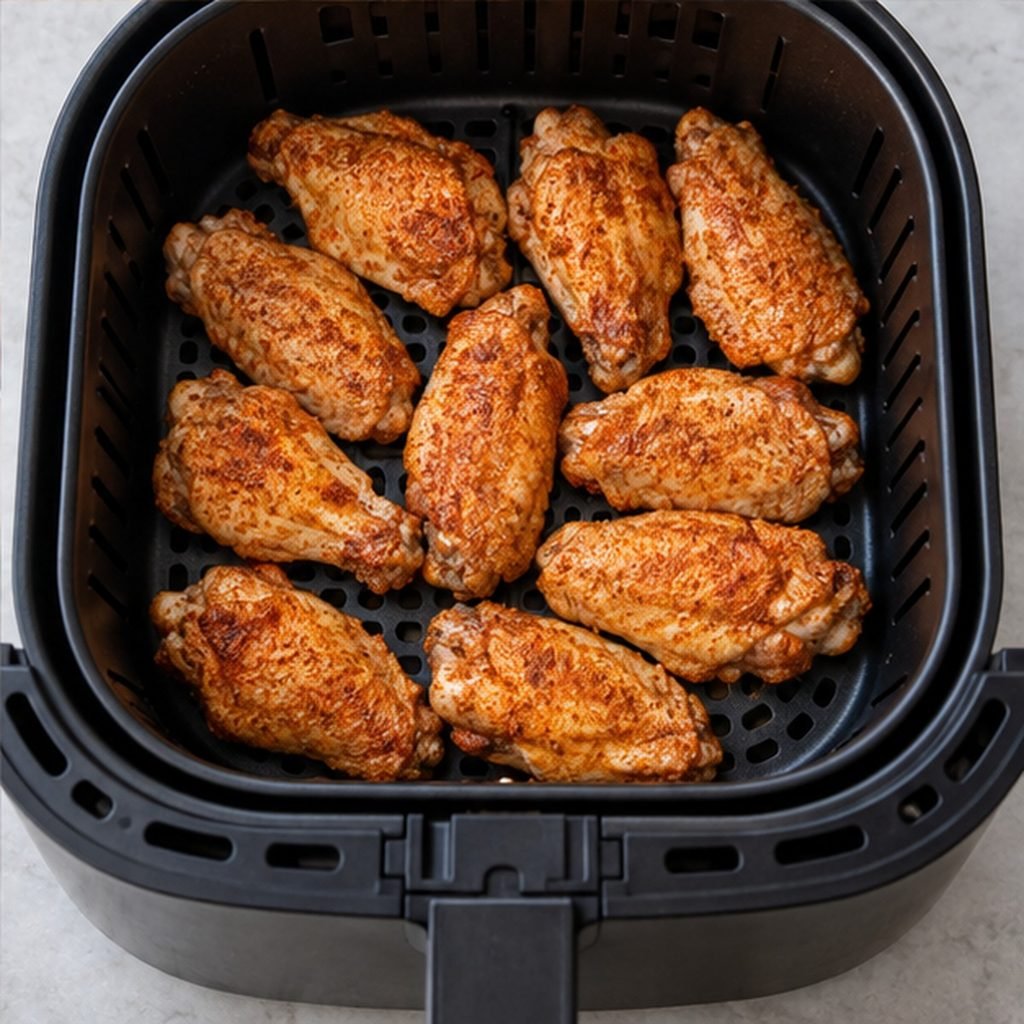
Arrange the seasoned wings in a single layer inside the air-fryer basket. Leave a little space between the pieces so the moving hot air can reach their surfaces.
Do not stack the wings. Cook them in separate batches if the entire quantity cannot fit comfortably in one layer.
Step 4: Air-Fry the Wings
Air-fry the wings at 400°F (200°C) for approximately 20–25 minutes. Turn the wings halfway through the cooking time so they brown more evenly.
The source Pin provides this time range, and the published Serious Eats method also uses 400°F for approximately 25 minutes.
Step 5: Check the Internal Temperature
Check several of the thickest wings with a clean food thermometer. Insert the probe into the thickest edible section without touching the bone.
Chicken wings must reach a minimum internal temperature of 165°F (74°C). If they have not reached that temperature, return them to the air fryer and continue cooking in short intervals.
Do not determine whether poultry is safe by looking at its color alone.
Step 6: Add Sauce and Serve
Serve the wings with their dry seasoning or transfer them to a clean bowl and toss them with the chosen sauce.
Do not place the cooked wings in the bowl that held the raw seasoned chicken unless the bowl has been thoroughly washed.
Wet sauces gradually soften the crisp skin, so apply them only after cooking and serve the wings immediately.
Why This Air-Fryer Method Works
Drying the skin and leaving space around every wing improves its contact with the circulating hot air. Excess water would otherwise turn into steam and interfere with browning.
The optional baking powder raises the pH of the chicken skin and can encourage browning and blistering. Baking powder is not the same as baking soda. Substituting the same quantity of baking soda can give the wings an unpleasant alkaline flavor.
A small amount of oil helps the dry seasoning adhere and promotes more even coloring. Adding significantly more oil does not guarantee crispier wings and may allow excess fat to collect in the air-fryer drawer.
Turning the wings halfway through cooking compensates for machines that heat more strongly from above. Certain oven-style air fryers circulate air differently and may not require turning, but checking and repositioning the wings usually produces more consistent results.
Always follow the appliance manual if it specifies a lower maximum temperature, different preheating instructions, or particular basket-loading requirements.
Seasoning and Sauce Options
Buffalo Wings
Mix hot sauce with a small amount of melted butter. Add the mixture gradually to the hot cooked wings and toss until lightly coated.
Using too much sauce can quickly soften the crispy skin. Serve additional Buffalo sauce separately for dipping if desired.
Garlic Parmesan Wings
Combine a small amount of melted butter or olive oil with garlic and finely grated Parmesan cheese.
Toss the cooked wings with the mixture immediately before serving. Do not apply the Parmesan mixture at the beginning because the cheese and garlic may burn at 400°F.
Lemon Pepper Wings
Finish the wings with finely grated lemon zest and freshly ground black pepper.
Use lemon juice sparingly. Although it adds acidity, too much liquid can soften the surface of the wings.
Barbecue Wings
Brush the wings with a thin layer of barbecue sauce during the final few minutes of cooking.
Watch them carefully because the sugar in barbecue sauce can scorch at high temperatures. Additional sauce can be served at the table instead of applying a heavy coating in the air fryer.
Dry-Seasoned Wings
Increase the amount of paprika, garlic powder, black pepper, or dried herbs to create a more strongly seasoned dry wing.
Check the ingredients in commercial seasoning mixtures. Blends containing a large amount of sugar can burn when exposed to high air-fryer temperatures.
Common Air-Fryer Chicken Wing Problems
Why Are My Wings Pale?
Pale wings commonly need more surface drying, additional space inside the basket, or a short period of extra cooking.
An overcrowded basket traps moisture and prevents the circulating air from reaching every surface. Divide the wings into smaller batches when necessary.
Why Did the Seasoning Burn?
Burned seasoning can result from a sugary spice mixture or an air fryer that runs hotter than its displayed temperature.
Reduce the temperature slightly, check the wings earlier, or apply sugar-containing sauces during the final part of cooking.
Why Are the Wings Brown but Undercooked?
The exterior can brown before the center reaches a safe temperature, particularly when the wings are large or very cold.
Reduce the temperature slightly and continue cooking until every tested piece reaches at least 165°F (74°C). Never judge poultry safety from its external color.
Why Aren’t the Wings Crispy?
The wings may not have been dried sufficiently, or the basket may have been overcrowded. A heavy wet marinade can also prevent the surface from becoming crisp.
Pat the wings dry, use only a light coating of oil, and leave space between the pieces.
Storage and Reheating
Refrigerate cooked chicken wings within two hours. Place them in a shallow covered container so they cool efficiently.
To reheat them, arrange the wings in a single layer in the air fryer and cook them at a moderate temperature until they are steaming hot. Previously cooked poultry and other leftovers should be reheated to 165°F (74°C).
Reheating can restore some of the exterior crispness, but freshly cooked wings will usually have the best texture.
Do not attempt to make improperly stored chicken safe by reheating it. If the wings remained at an unsafe temperature for too long, they should be discarded.