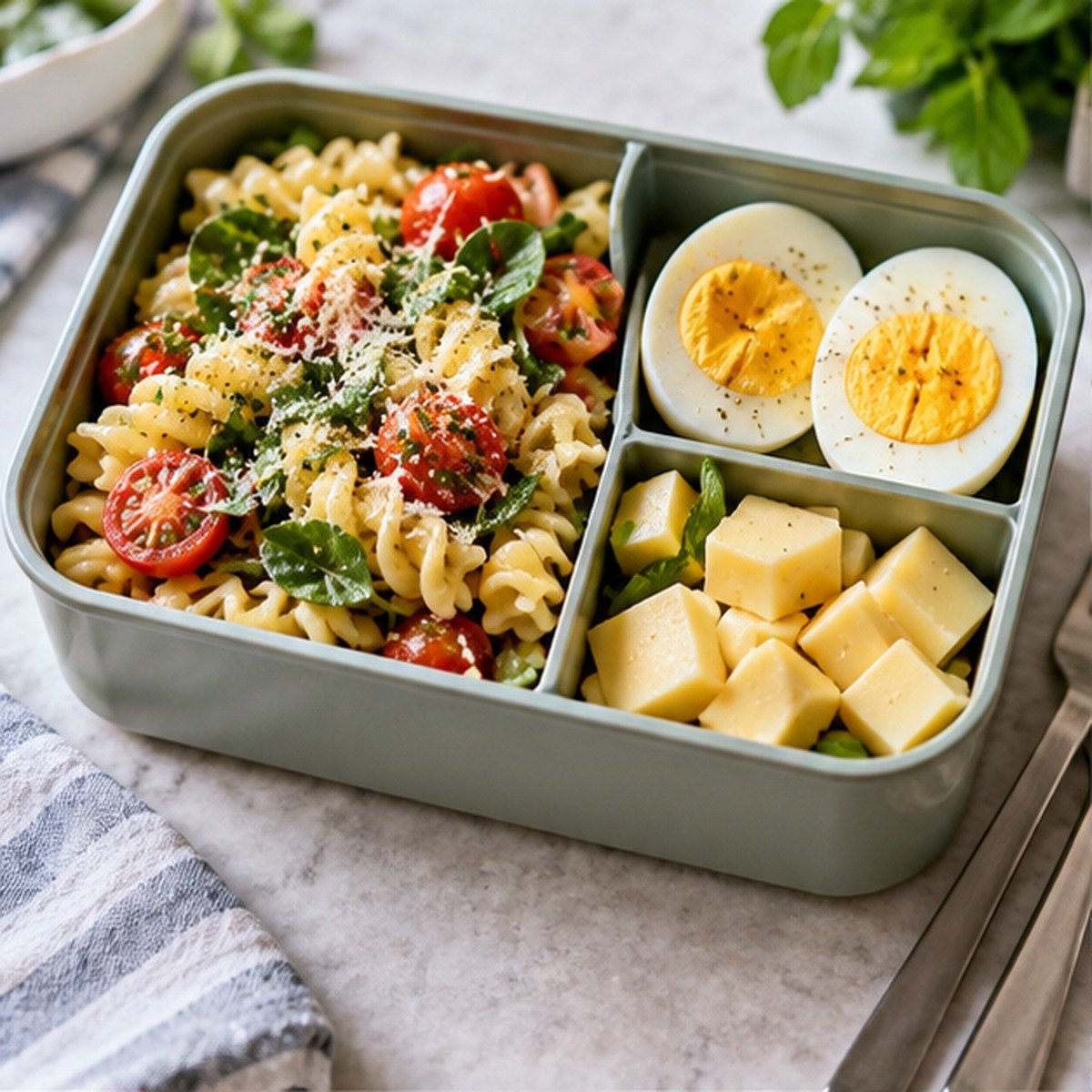

The Pin shows a cold bento built around spiral pasta salad with cherry tomatoes, a hard-boiled egg, cheese cubes, apple slices, and a cookie. This guide keeps those components and adds practical quantities for one lunch. Adjust the amount to the eater rather than treating the portions as a nutrition prescription.
Ingredients for One Lunch
- 1 cup cooked spiral pasta, cooled
- 1 teaspoon olive oil or a small amount of mild dressing
- 1/4 cup halved cherry tomatoes
- 1 hard-boiled egg
- 1 ounce cheese, cut into cubes
- 1/2 small apple, sliced
- 1 small cookie
- Salt and pepper to taste
Assembly
Step 1
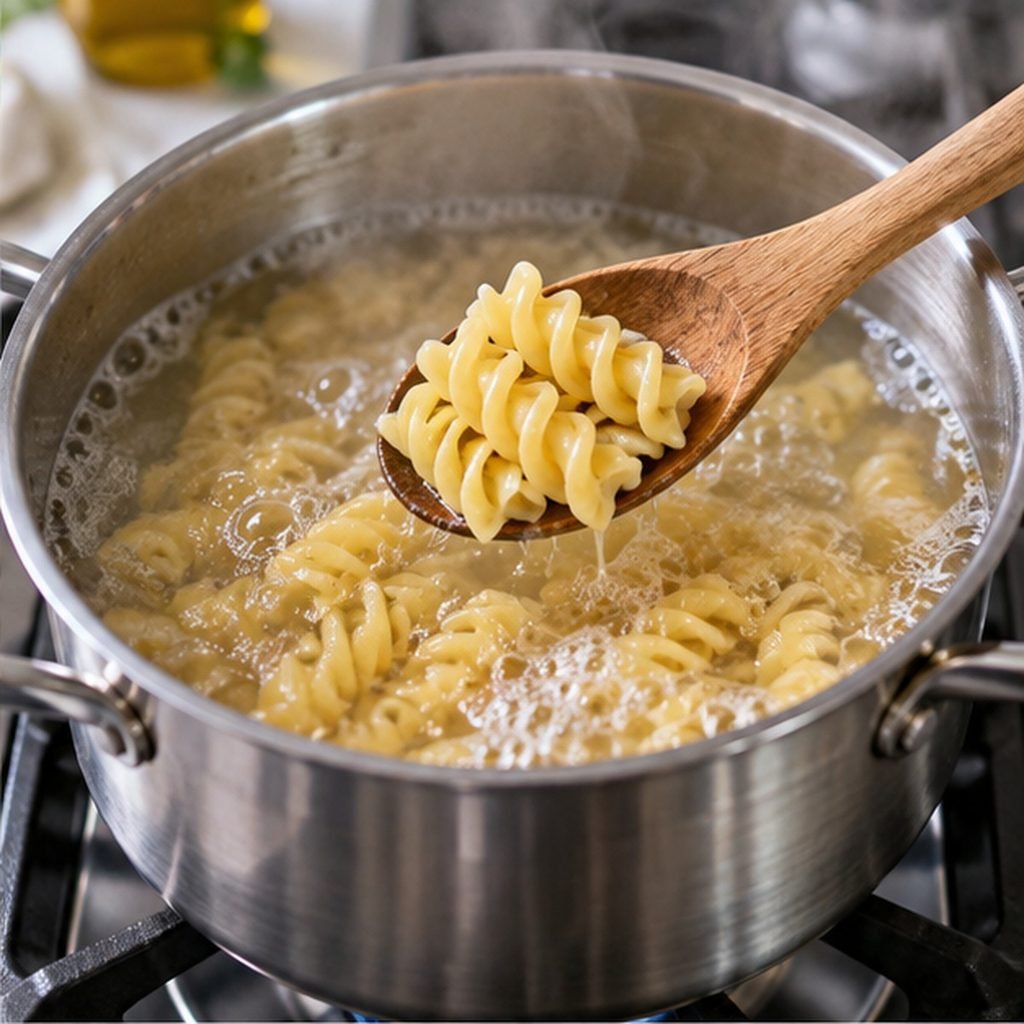
Cook the pasta until just tender. Drain, toss with olive oil or dressing, and cool promptly in a shallow container.
Step 2
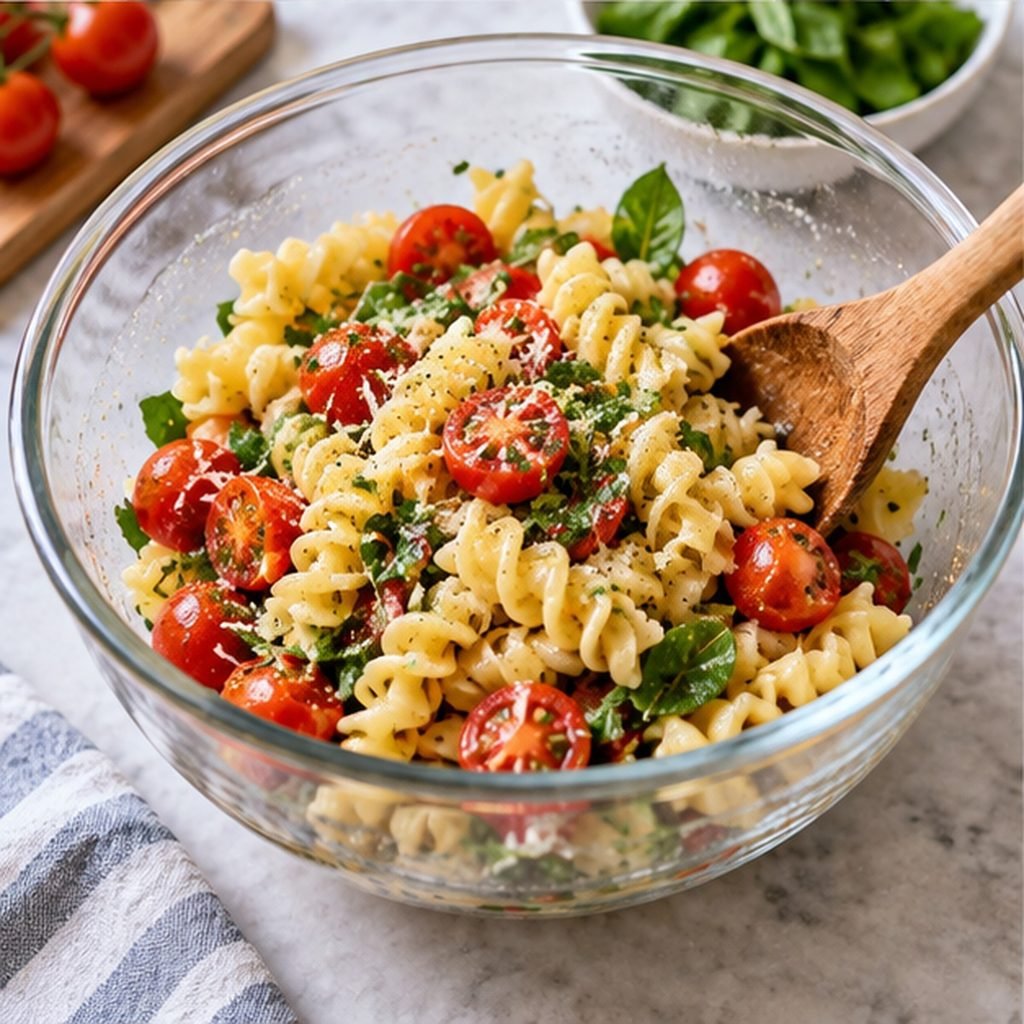
Mix the cold pasta with the tomatoes and season lightly. Keep a wet dressing in a separate cup if the lunchbox is prone to leaking.
Step 3
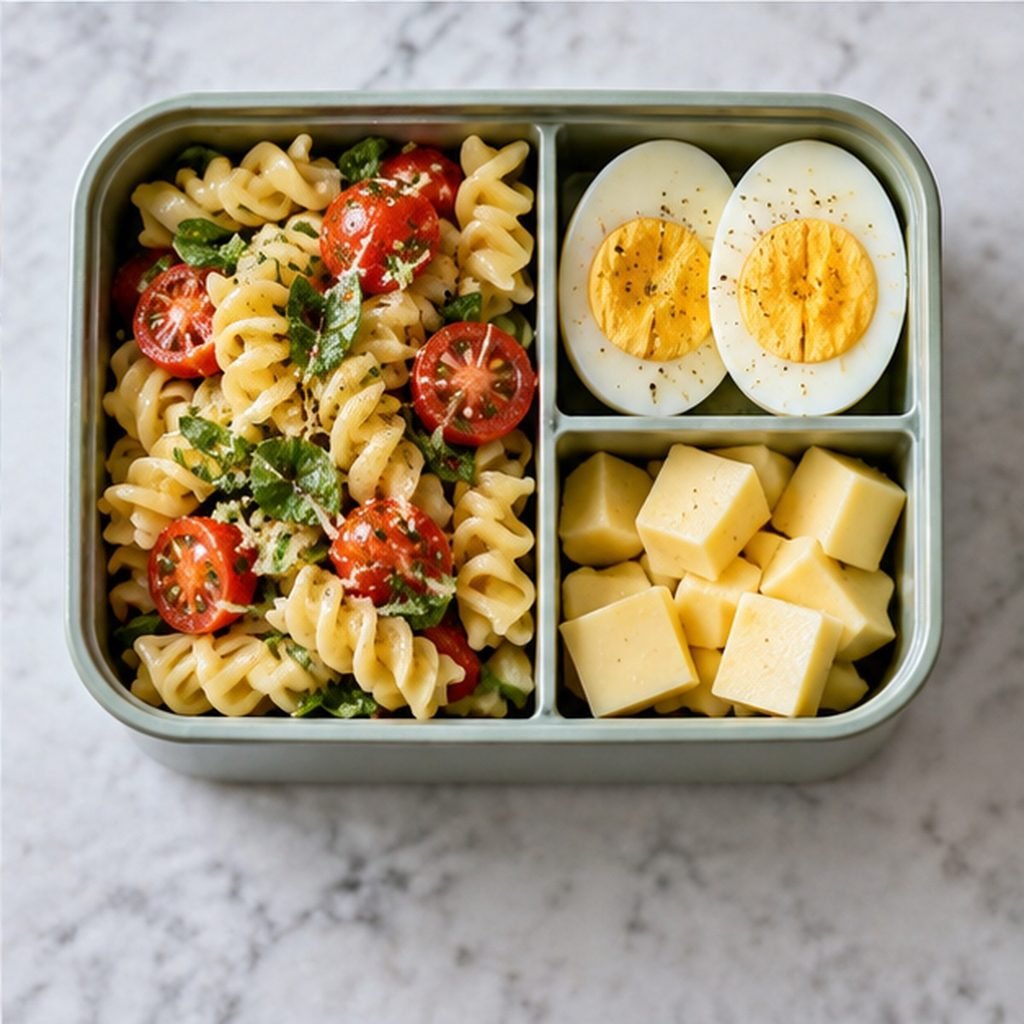
Add the peeled hard-boiled egg and cheese cubes to separate compartments.
Step 4
Slice the apple shortly before packing. A small amount of lemon juice can slow browning, although it changes the taste.
Step 5
Add the cookie as an optional sweet component. Close the box and place it in an insulated bag with two cold sources.³
Make Ahead and Food Safety
Cook and cool the pasta the night before, then refrigerate it in a covered container. Eggs, cheese, cooked pasta, and cut produce are perishable. USDA guidance recommends at least two cold sources in an insulated lunch bag. Do not send the lunch at room temperature and assume it will remain safe until noon.³
A vinaigrette generally travels better than a heavy creamy dressing, but both still require refrigeration once mixed with cooked pasta and other perishable ingredients. Dry the tomatoes and apple before packing to keep extra moisture out of the box.
Variations
Vegetarian protein
Replace the egg with chickpeas or edamame, keeping the lunch cold.
Different produce
Use cucumber, bell pepper, grapes, berries, or orange segments according to age and preference.
Whole-grain pasta
Use whole-grain pasta if the eater accepts its flavor and texture.
No dairy
Replace cheese with a suitable dairy-free product or another protein food, checking allergen labels.
Frequently Asked Questions
How do I stop pasta from clumping?
Toss drained pasta with a small amount of oil or dressing and cool it before packing.
Can I freeze this lunch?
The completed box does not freeze well. Freeze appropriate cooked components separately.
How long can it sit without refrigeration?
Perishable food should stay cold. Pack two cold sources and follow school refrigeration procedures.
Can I add chicken or tuna?
Yes, if fully cooked and kept cold. Use clean utensils and avoid cross-contamination.
How do I stop apples browning?
Cut them close to packing time or toss lightly with lemon juice.
Is the cookie required?
No. It is part of the pictured combination and can be included, replaced, or omitted.
Choosing Foods That Will Be Eaten
A useful lunch is one the child can open and eat within the time available. Familiar food deserves priority over a visually perfect assortment. New foods can be packed in a small quantity beside accepted foods, but school lunch is rarely the best setting for pressure or a large unfamiliar portion. Ask what was easy to eat, what returned untouched, and whether the portion was too large before changing the entire plan.
Keeping Portions Practical
Bento compartments can make portions look predetermined, but they are only containers. A large compartment does not have to be filled, and a small one may not hold enough for an older child. Appetite varies from day to day with activity, growth, sleep, and breakfast. Pack a sensible starting amount, observe what comes home, and adjust. Individual medical or nutrition needs require advice from the child’s qualified clinician.
A Simple Preparation Schedule
The evening before, cook any pasta, rice, eggs, chicken, muffins, or pancakes that need time to cool. Refrigerate cooked food promptly in shallow containers. Wash and dry durable produce such as carrots, cucumbers, and grapes. In the morning, assemble bread and wraps, slice produce that browns or releases water, fill dip cups, and add the cold sources. This sequence protects texture while keeping the morning workload manageable.
Packing Produce Well
Dry produce is easier to pack without making nearby food soggy. Cut items into shapes appropriate for the child’s age and eating skills. Whole grapes, cherry tomatoes, hard raw vegetables, nuts, popcorn, and thick spoonfuls of nut butter can pose choking hazards for young children. The safest preparation depends on age and development, so caregivers should follow current pediatric guidance and the child’s established feeding plan.
Handling Leftovers
A lunch that returns at the end of the school day has had an uncertain temperature history. Perishable leftovers should generally be discarded rather than chilled again for another meal. Unopened shelf-stable packages are different, but damaged or leaking packages should be discarded. Wash the lunchbox, containers, seals, and reusable utensils with hot soapy water and allow them to dry completely before the next use.
Keeping the Menu Flexible
Each listed combination is a framework, not a rule. Swap fruit for another fruit, vegetables for vegetables, or one suitable protein food for another while preserving the basic structure. Seasonal and locally available food may be cheaper and taste better. The most useful rotation is small enough to shop for efficiently and broad enough that the same lunch does not appear every day.
Managing Dips and Condiments
Pack dressings, salsa, hummus, yogurt, and syrup in containers that the child can open independently. Use only the amount likely to be eaten. A dip can make vegetables or a main food more appealing, but it can also leak into other compartments. Test the closed container with water at home before trusting it with a sauce in a backpack.
Label Checks
Packaged bread, tortillas, deli meat, cheese, crackers, sauces, meat alternatives, and snack bars can contain allergens or more sodium than expected. Recipes and brands change, so read the current label every time a product matters for an allergy. Do not transfer a packaged food into an unlabeled container for a child who needs to identify ingredients at school.
Cooling Cooked Foods
Do not seal steaming pasta, rice, meat, or egg in the lunch container. Steam condenses on the lid, harms texture, and does not provide safe long-term hot holding. Cool cooked food promptly in shallow containers in the refrigerator, then assemble the cold lunch. A hot item belongs in a preheated insulated food jar that is designed to maintain temperature, not in a standard plastic bento compartment.
Choosing a Lunchbox
Choose a container that closes securely, fits inside an insulated bag, and can be opened without adult help. Removable seals and corners must be washed well because food residue collects there. A compartment box controls separation but does not refrigerate food. Test the box at home with water to identify leaks before using yogurt, dressing, salsa, or juicy fruit.
Preventing Soggy Food
Moisture moves between foods in a closed box. Cool every cooked component, dry produce, and separate sauces. Put a barrier such as cheese or lettuce between bread and a moist filling when appropriate. Pack toasted crackers and chips in their own sealed space. These steps improve texture, but they do not replace cold storage for perishable ingredients.
Drinks and Cold Sources
Water is a simple default drink when the school permits a bottle. A frozen water bottle may count as one cold source while it remains frozen, but USDA guidance still recommends two cold sources for perishable lunches. Confirm that the bottle will not leak as it thaws, and place it where the cold can reach the food rather than in an exterior pocket.
School Rules
Schools may restrict nuts, glass containers, sharp skewers, heating equipment, or foods that require staff assistance. Check the current classroom and cafeteria rules before planning the week. Replace skewers with short food picks only when permitted and appropriate for the child. The safest lunch is one that meets the institution’s rules and the child’s documented allergy or medical plan.
Reviewing What Comes Home
Uneaten food provides useful information but not a complete diagnosis. A child may run out of time, dislike the texture after storage, struggle with packaging, or simply have less appetite that day. Ask a neutral question and look for patterns over several lunches. Adjust one component or portion at a time so the reason for improvement is easier to identify.
Keeping a Short Rotation
A reliable rotation can repeat several accepted mains while changing the produce or side. Write down combinations that were eaten and traveled well, then reuse them. Repetition reduces shopping waste and morning decisions. Variety can be introduced gradually through one seasonal fruit, vegetable, bread, or dip rather than replacing every familiar component at once.
Sources
- MOMables. Easy Pasta Lunch Box. https://www.momables.com/pasta-lunch-box/
- Healthy Family Project. Southwestern Pasta Salad Bento Box.
https://healthyfamilyproject.com/recipes/southwestern-pasta-salad-bento-box/ - USDA Food Safety and Inspection Service. Keeping Bag Lunches Safe.
https://www.fsis.usda.gov/food-safety/safe-food-handling-and-preparation/food-safety-basics/keeping-bag-lunches-safe