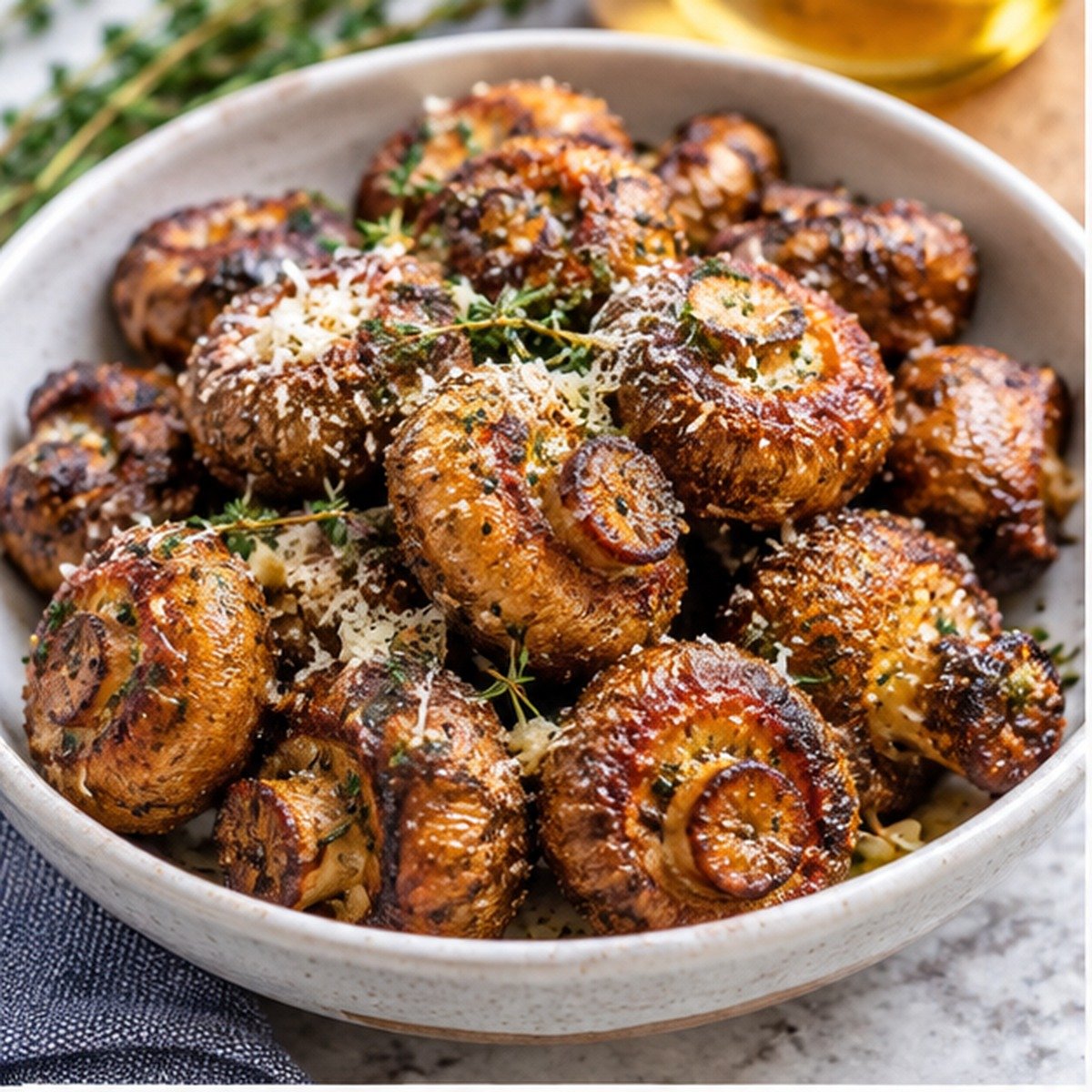

These mushrooms are seasoned with garlic, Parmesan, herbs, and a small amount of oil, then cooked in moving hot air until browned at the edges and tender in the center. Published recipes cluster around 380–400°F for roughly 8–12 minutes, but moisture content, cut size, and basket load can shift the result.
Ingredients
- 12 ounces cremini or button mushrooms
- 1 tablespoon olive oil
- 1 teaspoon soy sauce, optional
- 1/2 teaspoon garlic powder
- 2 tablespoons finely grated Parmesan
- 1 teaspoon fresh thyme leaves or 1/2 teaspoon dried thyme
- Black pepper and a small pinch of salt
Method
Step 1
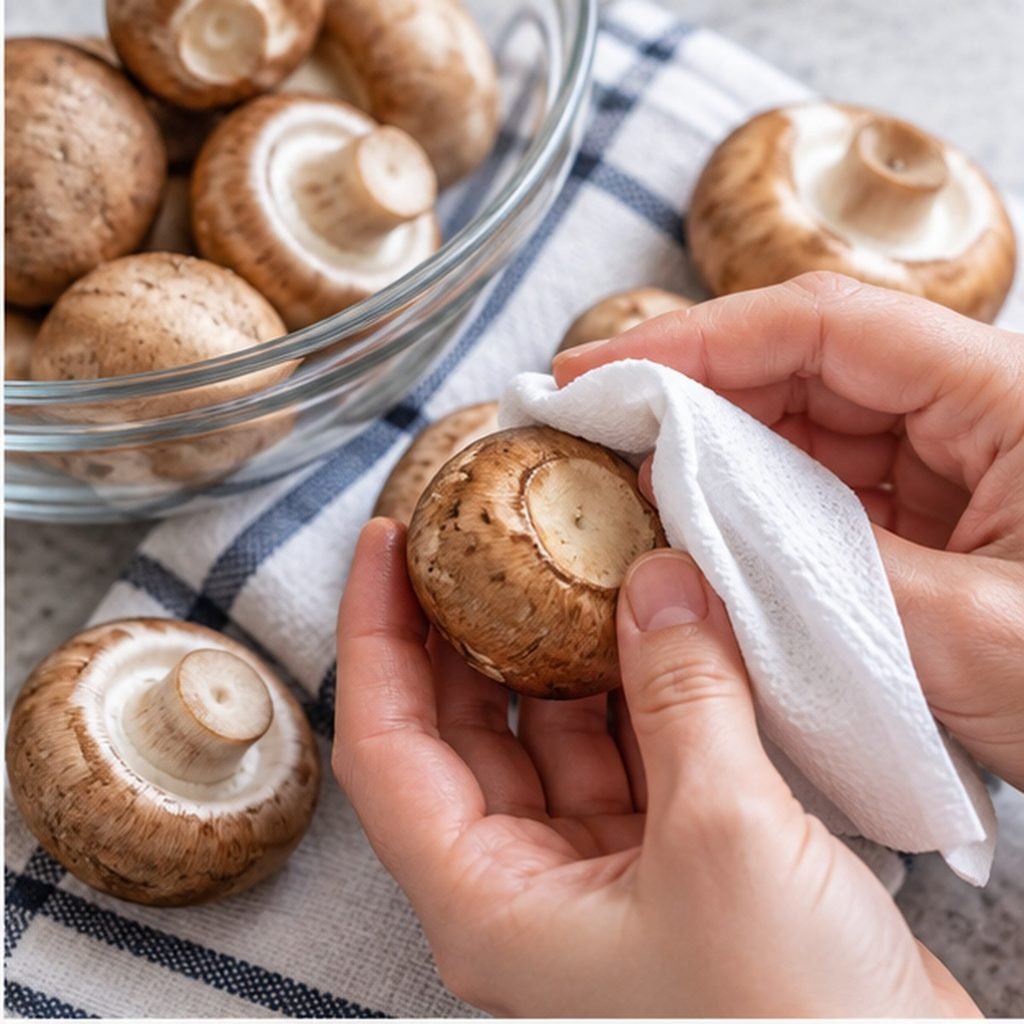
Wipe or quickly rinse the mushrooms, then dry them thoroughly. Halve small mushrooms and quarter larger ones so the pieces are similar in size.
Step 2
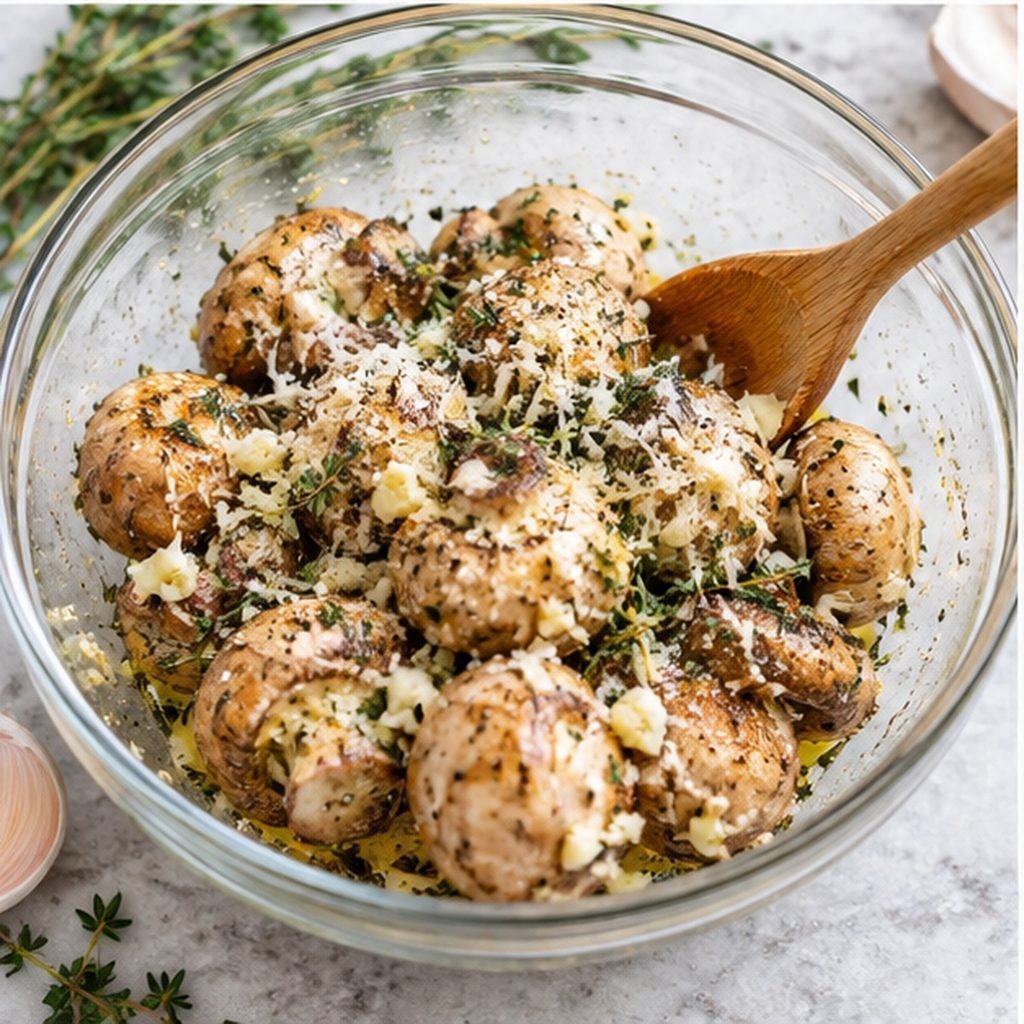
Toss with oil, soy sauce if using, garlic, thyme, pepper, and Parmesan. Add salt cautiously because soy sauce and Parmesan are salty.
Step 3
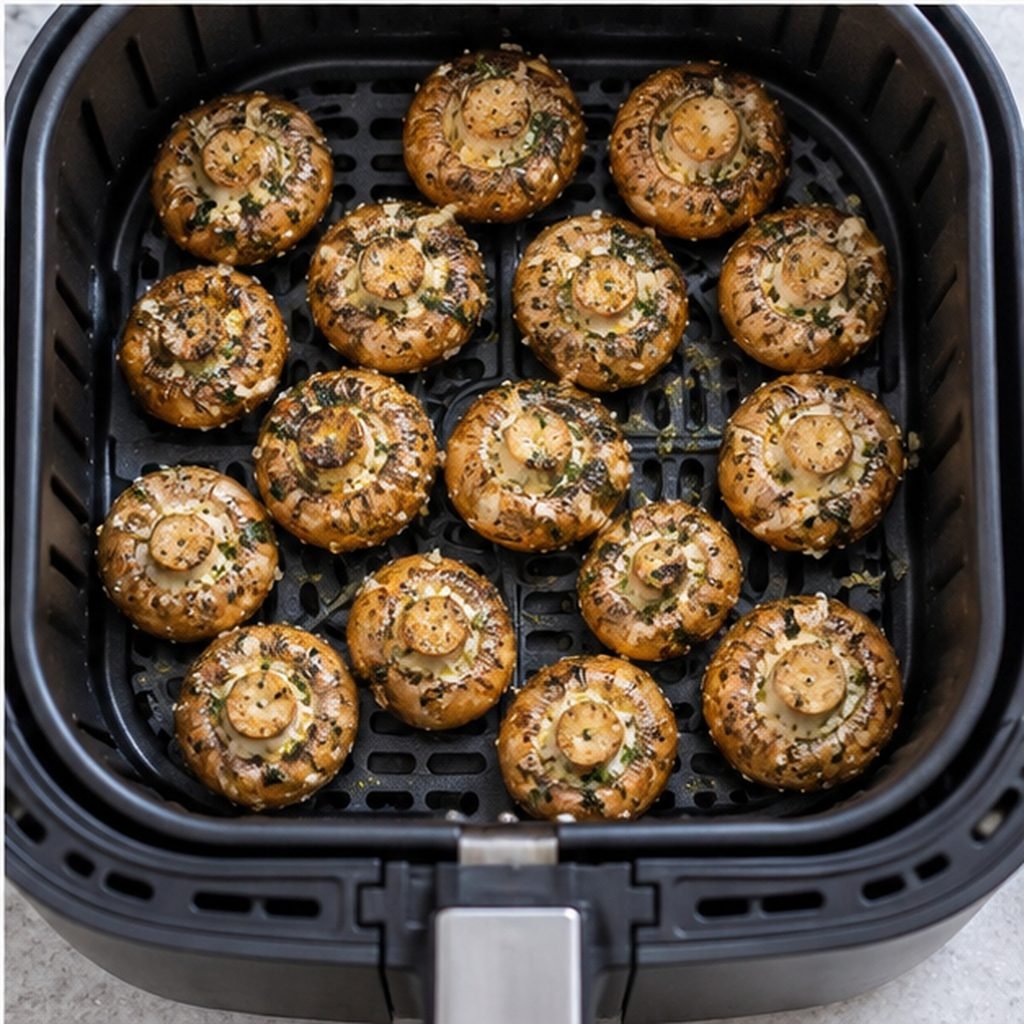
Arrange in one layer. Air fry at 380°F or 193°C for five minutes, shake the basket, then cook another five to seven minutes until browned and tender.¹
Step 4
Serve immediately. Taste before adding more salt and finish with extra herbs or Parmesan if desired.
Texture and Troubleshooting
Mushrooms release water as they heat. Overcrowding traps that moisture and produces a steamed texture, while a single layer lets more water escape. Very thin slices can dry out before browning; halves and quarters give a juicier center. If the basket contains liquid after five minutes, shake well and extend the cook in short increments.
Garlic powder is less likely to burn than minced fresh garlic at air-fryer temperature. If using fresh garlic, add it during the second half or mix it into melted butter after cooking. Finely grated Parmesan adheres more evenly than large shreds.
Serving and Storage
Serve the mushrooms with eggs, rice, pasta, polenta, steak, chicken, or a grain bowl. Refrigerate leftovers within two hours. Reheat briefly in the air fryer, understanding that they will be softer than the fresh batch.
Frequently Asked Questions
Do mushrooms need to be peeled?
No. Clean them and trim dry stem ends.
Can I use portobello mushrooms?
Yes, but cut them into even pieces and expect a different, meatier texture.
Why are the mushrooms watery?
The basket was likely crowded or the mushrooms were not dried. Cook in a single layer.
Can I omit Parmesan?
Yes. Increase herbs or add nutritional yeast if suitable, but the flavor will differ.
Can I use fresh garlic?
Yes, but add it late or after cooking to reduce burning.
What temperature should I use?
Start at 380°F. Recipes vary from 350–400°F, so check early and adjust for the appliance.
Ingredient Selection
Choose ingredients of similar size so they finish at roughly the same time. Freshness affects both moisture and texture: wet surfaces slow browning, while dried-out food can become tough before it colors. When a recipe names a particular cut, mushroom type, sausage size, or bread thickness, changing it may require a different schedule. Treat the first batch in any appliance as a calibration batch and check it earlier than the stated finish.
Preparing the Air Fryer
Place the appliance on a stable, heat-resistant surface with the clearance required by its manual. Make sure the basket and drip area are clean because old grease can smoke. Preheating is model-dependent; some recipes benefit from it, while some manufacturers do not require it. Never cover vents, and never use paper or foil in a way that can lift into the heating element.
Controlling Browning
Browning depends on surface dryness, temperature, oil, sugar, and space around the food. A thin coat of oil can help, but more oil does not guarantee more crispness. Sugary marinades and sweet sauces darken quickly, so add them late or reduce the temperature. If the outside colors too fast, lower the heat and continue until the center is properly cooked.
Working in Batches
A single layer is more reliable than a packed basket. When food overlaps, the covered surfaces receive less moving hot air and release steam into the basket. Keep the first batch warm only if it can be held safely, and remember that a hot appliance may cook the second batch faster. Record the successful load size and time for the specific machine.
Using a Food Thermometer
Insert the probe into the thickest edible part without touching bone, the basket, or a large pocket of fat. Check more than one piece when sizes differ. A thermometer confirms safety for meat and poultry, while texture and color guide quality. Clean the probe between raw and cooked checks according to the thermometer manufacturer’s instructions.
Scaling the Recipe
Doubling ingredients does not mean doubling the cooking time. A larger quantity usually requires more batches because airflow is the limiting factor. Keep seasoning proportional, but add salt cautiously when cheese, soy sauce, cured meat, or a commercial blend is involved. For a smaller batch, check earlier because the basket may heat and circulate air more efficiently.
Serving the Food
Air-fried food is usually crispest immediately after cooking. Move it to a rack rather than a closed bowl if it must wait briefly; trapped steam softens the surface. Add wet sauces just before serving. Let very hot fillings, berries, cheese, and dense foods cool enough to eat safely, especially when serving children.
Storage
Refrigerate perishable cooked food within two hours, or within one hour in very hot conditions. Use shallow containers so food cools efficiently. Label and date leftovers rather than relying on memory. Reheating can restore some surface texture, but it does not make food safe if it was stored improperly before refrigeration.
Reheating
Preheat if the appliance manual recommends it, then reheat in a single layer at a moderate temperature so the exterior does not burn before the center is hot. Turn or shake once. For cooked leftovers containing meat or poultry, heat to 165°F or 74°C. Reheat only the amount that will be served.
Recipe Testing at Home
Because the Pin and cited recipes cannot account for every appliance, use observable checkpoints. Note the weight or size of the food, starting temperature, basket load, set temperature, check time, final temperature, and texture. Those notes create a repeatable household method without pretending that one published minute count works in every air fryer.
Seasoning Adjustments
Taste seasoning blends before adding extra salt, provided they contain no raw ingredient that makes tasting unsafe. Garlic powder, onion powder, paprika, pepper, dried herbs, citrus zest, and finely grated hard cheese behave differently under high heat. Apply delicate fresh herbs after cooking. If a seasoning burns, reduce the heat or add that ingredient later next time.
Cleaning After Cooking
Allow the appliance to cool and unplug it before cleaning. Remove grease and food residue according to the manual, using nonabrasive tools on coated baskets. A clean basket improves airflow and reduces smoke in later batches. Do not immerse electrical parts, and do not assume a removable component is dishwasher-safe unless the manufacturer says it is.
Checking the First Batch
Begin checking several minutes before the proposed finish. Open the basket, examine browning, turn or shake the food, and measure temperature where safety requires it. If more cooking is needed, use short increments. This avoids turning a reasonable estimate into a rigid promise. Once the batch is successful, note the final time for that food size, quantity, and machine.
Avoiding Cross Contamination
Keep raw meat and poultry separate from produce and ready-to-eat ingredients. Use separate plates or wash them thoroughly between uses. Do not return cooked food to a bowl that held the raw seasoned food. Wash hands with soap after handling raw ingredients, and clean the counter, utensils, thermometer probe, and basket surfaces that were contaminated.
Adapting Flavor Without Guesswork
Change one variable at a time when adapting the recipe. Keep the core cooking method stable, then adjust a spice, herb, finishing sauce, or garnish. A wet marinade can change browning and may require extra drying, while sugar can accelerate darkening. Recording a single change makes it easier to understand why the next batch differs from the first.
What the Time Range Means
A cooking range is the interval in which checking should become frequent, not a guarantee that every piece is done. Food may start colder, be cut thicker, or sit closer together than in the source recipe. Appliance thermostats also cycle. Use the lower end to inspect the food, then rely on temperature and texture to decide when to stop.
Serving Size and Nutrition
Serving size depends on the rest of the meal and the needs of the people eating it. Ingredient brands, oil absorption, trimming, sauces, and portion size all change nutrition totals. For that reason, this guide does not attach a precise calorie claim to the recipe. Use package labels or a validated nutrition database with the exact measured ingredients if a calculation is needed.
Sources
- The Recipe Critic. Garlic Parmesan Air Fryer Mushrooms. https://therecipecritic.com/air-fryer-mushrooms/
- Two Purple Figs. Air Fryer Mushrooms. https://www.twopurplefigs.com/air-fryer-mushrooms/